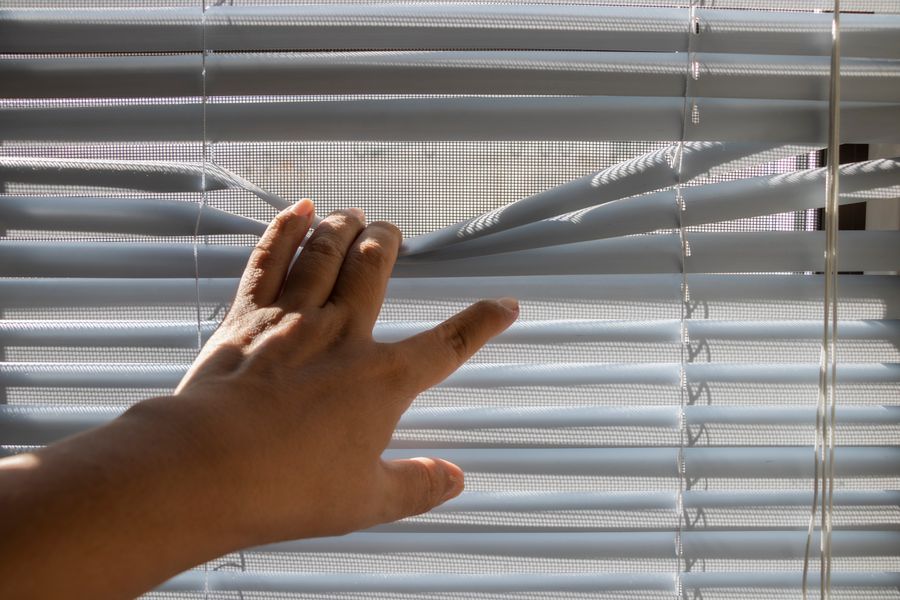
Made-to-measure blinds come in half a dozen different formats. We compare roller, blackout, vertical, wooden, roman and perfect fit, and say which room each one belongs in.
Updated October 20266 blind types reviewedHow we test
Eleanor WhitfieldEleanor covers sleep, homes and the appliances that live in them. She has a low tolerance for products that are mostly marketing.
Choosing blinds looks like a decorating decision and is really an engineering one. The fabric and colour are the easy part. What determines whether you are happy in two years is whether the blind suits the window it is fitted to, the room's humidity and how much light you need to keep out.
Swift Direct Blinds makes everything to measure, offers free samples on all its ranges and backs its made-to-measure blinds with a five-year guarantee. That reduces the risk considerably, but it does not choose the format for you. This guide works through the six types that cover almost every window in a British home.
Straight to itRoller blinds are the right answer for most windows in most rooms. For bedrooms, go straight to blackout blinds; for bathrooms and kitchens, look at faux wood rather than real wood.
Swift Direct Blinds offers free samples and a five-year guarantee on its made-to-measure blinds.
Affiliate disclosure: Reviews Lounge earns a commission when you buy through links on this page, at no additional cost to you. Commissions never influence our rankings, scores or recommendations. Full disclosure.
The shortlist
Start here
Three formats account for the majority of orders: one all-rounder, one for sleep and one for wide windows.
Best overall
Roller blinds
★★★★★4.9/ 5
Every roomHuge fabric choiceEasy to clean
The default made-to-measure blind: a single fabric panel on a roller, available in everything from sheer voiles to full blackout and wipeable PVC. It is the format that suits the widest range of rooms and budgets.
Blinds in a coated fabric that blocks light through the material — the right choice for bedrooms, nurseries and anyone sleeping during daylight. Fit it outside the reveal if genuine darkness is the point.
Hanging fabric louvres that rotate and draw to one side – the practical answer for patio doors, bay windows and very wide spans. It is the practical choice rather than the fashionable one.
Three reasons made-to-measure beats an off-the-shelf blind cut down to fit.
British windows are not standard sizes
Reveals are rarely square, period properties are rarely consistent and even new builds vary between rooms. A ready-made blind trimmed to fit leaves light gaps down the sides, which is exactly the thing you were trying to prevent. Made to measure removes the compromise and the gaps.
A five-year guarantee on the blinds
Swift Direct Blinds applies a five-year guarantee to all its made-to-measure blinds. For a mechanism that gets pulled several times a day for years, that cover is the most meaningful part of the specification, the fabric almost never fails first, the mechanism does.
Free samples take the guesswork out
Samples are available free across the ranges, with up to ten sent out, so you can see how a fabric behaves in your own light rather than on a screen. Colour on a monitor is unreliable and translucency is impossible to judge from a photograph, so this is a step worth taking before ordering.
Buying guide
How to choose the right one
Three decisions, in this order, will land you on the right blind.
1
Measure for the fit you want first
Decide whether the blind sits inside the reveal or outside it on the face of the wall before you measure anything, because the two need different numbers. Inside gives a neat, built-in look but always leaves small light gaps at the edges; outside covers the whole window and blocks far more light. Measure in three places across the width and take the smallest, because reveals are rarely square. If the window has handles that protrude, check the clearance or choose a perfect fit frame instead.
2
Match the material to the room's humidity
This is where most blind purchases go wrong. Real wood swells and warps in sustained steam, so bathrooms and above hobs want faux wood, aluminium or a wipeable PVC roller instead. Fabric blinds in a kitchen will absorb cooking smells over time. Conversely, a bedroom or living room with no moisture problem is exactly where real wood and fabric romans look their best, so save them for those rooms.
3
Decide how much light you need to block
Fabrics range from sheer through dimout to true blackout, and the difference matters enormously in a bedroom. A blackout fabric blocks light through the material, but light still enters around the edges of any reveal-fitted blind, so for a child's room or a shift worker's bedroom fit outside the reveal, or add curtains over the top. If you want privacy without darkness, day and night or double roller blinds let you switch between the two.
📏 Measuring & fitting
Order free samples before you measure, because seeing a fabric's translucency in your own room frequently changes which type you want. Then measure the width in three places and the drop in three places, and work to the smallest width. Note which way the window opens and whether handles, tilt-and-turn mechanisms or trickle vents are in the way.
If drilling is a problem: rented property, uPVC frames you do not want to pierce, or a conservatory: there is a whole no-drill category covering roller, wooden, Venetian, pleated and blackout styles, plus clip-on, twist-fit and stick-on fittings. Perfect fit frames clip into the window's existing beading and are the tidiest no-drill solution for uPVC.
🧼 Care & longevity
Most blinds need dusting rather than cleaning. A soft brush attachment or a feather duster along the slats and a wipe of hard surfaces with a barely damp cloth is the whole routine. Fabric rollers should not be scrubbed, spot-clean gently and accept that heavy marks on a light fabric may not come out entirely.
Mechanisms outlast fabrics in most cases, but they need the blind to be operated squarely rather than yanked from one side, which is the main cause of chains jumping and cords fraying. Child safety is a legal matter as well as a practical one: cords and chains must be fitted with the supplied safety devices and kept out of reach of children and cots.
In-depth reviews
All 6, reviewed
Ranked by how well each one delivers on what it promises – not by price.
1
Best overall
Roller blinds
★★★★★4.9/ 5
4.9Score
If you are not sure what blind you want, you almost certainly want a roller.
What makes it work
Roller blinds are the format that suits the most windows in the most rooms, which is why they dominate every made-to-measure range. The mechanism is the simplest available; one fabric panel winding onto a tube — so there is very little to go wrong, and it is backed by the five-year guarantee that covers the made-to-measure blinds. Because the choice is purely about fabric, the same format covers a sheer voile for a living room, a dimout for a snug, a true blackout for a bedroom and a wipeable PVC for a kitchen or bathroom.
The limitations are structural rather than aesthetic. A roller is all or nothing: you can have it up, down, or part way, but you cannot angle it to let light in while keeping privacy the way a Venetian or vertical can. Fitted inside a reveal it will always leave small light gaps at the sides. And because there is a single roll of fabric at the top, a very wide window needs either a heavy-duty tube or two blinds side by side. For most windows, none of that is a real problem.
Format: Single fabric panel on a roller tube
Fabric options: Sheer, dimout, blackout, PVC
Fit: Inside or outside the reveal
Guarantee: Five years on made-to-measure blinds
Pros
Suits almost any room with the right fabric choice
We may earn a commission from this link, at no extra cost to you.
2
Best for bedrooms
Blackout blinds
★★★★★4.7/ 5
4.7Score
The only blind that makes a real difference to how well a child sleeps in June.
What makes it work
Blackout is a fabric specification rather than a separate mechanism, and it is available as a roller, a roman, a vertical and a pleated blind. The fabric carries a coating that stops light passing through it, which transforms a bedroom in a British summer and is close to essential in a nursery or for anyone working nights. Many blackout fabrics also have a useful thermal side effect, reducing heat loss through the glass in winter and heat gain in summer, which is why thermal and blackout ranges overlap heavily. For a nursery, that overlap between darkness and insulation is a useful bonus.
The crucial point, and the one that disappoints people, is that a blackout fabric blocks light through the material but not around the edges. A blind fitted inside a reveal will still let a halo of light in at the sides and top. If genuine darkness is the goal, fit outside the reveal on the face of the wall, choose a perfect fit frame, or layer curtains over the blind. Blackout fabrics are also thicker and heavier than standard ones, so they roll into a bulkier cylinder at the top of the window and can be harder to spot-clean.
Format: Coated fabric, available in several blind types
Light control: Blocks light through the material
Side benefit: Often thermally insulating
Best fit: Outside the reveal for maximum darkness
Pros
Genuinely transforms a bedroom in summer
Thermal benefit in winter as well as darkness
Available across roller, roman, vertical and pleated formats
Cons
Light still enters around the edges in a reveal fit
We may earn a commission from this link, at no extra cost to you.
3
Best for wide windows
Vertical blinds
★★★★★4.6/ 5
4.6Score
The only format that handles a full-width patio door without needing to be split into three blinds.
What makes it work
Vertical blinds solve a problem no other format handles as well: very wide openings. Because the louvres hang from a track rather than rolling onto a tube, the span can be far greater than a single roller allows, which makes them the standard choice for patio doors, sliding doors and wide bays. They also give two independent controls – rotate the louvres to angle daylight and keep privacy, or draw the whole set to one side to clear the opening completely, which matters enormously on a door you actually walk through.
They carry a dated reputation from decades of office installations, and that is fair up to a point, although modern fabrics and wider louvre options have improved things considerably. The practical drawbacks are more relevant: individual louvres can be knocked out of line by pets, children or a draught, and the chains and weights at the bottom need keeping out of reach for child safety. There are more moving parts than a roller, so there is more to go wrong, which is where the five-year guarantee earns its place. Judge them on the opening they have to cover rather than on fashion.
Format: Hanging fabric louvres on a track
Light control: Rotate to angle, or draw fully aside
We may earn a commission from this link, at no extra cost to you.
4
Best for appearance
Wooden and faux wood blinds
★★★★★4.6/ 5
4.6Score
The blind that reads as part of the architecture rather than as a window covering.
What makes it work
Wooden blinds are the format people choose when appearance matters most. Horizontal timber slats tilt through a wide arc, which gives finer light control than anything else here: you can bounce daylight up onto a ceiling, cut low afternoon sun, or close them almost fully for privacy, all without losing the view entirely. In a living room, study or bedroom with no moisture problem, real wood brings a warmth that fabric cannot match, and it suits period properties particularly well. No other format gives you that much control over where the light goes.
The restriction is humidity, and it should not be ignored. Real wood swells, warps and discolours in sustained steam, which rules it out for bathrooms and for windows directly above a hob or sink. Faux wood exists precisely for those rooms — it looks very close, wipes clean and is unaffected by moisture, at the cost of being heavier and slightly less convincing up close. Wooden blinds in either material are also heavier than fabric, which means more substantial fixings, and dust settles visibly on every slat, so they need regular attention.
Format: Horizontal tilting slats
Materials: Real wood or faux wood
Light control: Fine adjustment via slat angle
Avoid: Real wood in bathrooms and above hobs
Pros
Finest light control of any format here
Looks architectural rather than added on
Faux wood covers humid rooms convincingly
Cons
Real wood warps in bathrooms and steamy kitchens
Dust shows on every slat and needs regular cleaning
We may earn a commission from this link, at no extra cost to you.
5
Best soft look
Roman blinds
★★★★★4.3/ 5
4.3Score
The closest you get to curtains without giving up the window sill or the radiator below it.
What makes it work
Roman blinds are the decorative choice. The fabric gathers into neat horizontal folds as it lifts, which gives a room the softness and texture of curtains while taking up almost none of the wall either side. That makes them ideal where a radiator, a window seat or a piece of furniture sits directly below the window and full-length drapes are impossible. They are also the format where designer fabrics really pay off, and the ranges from names such as Laura Ashley, Orla Kiely and Sophie Allport are offered in roman as well as roller form.
They are the least practical option on this list and that is the plain trade-off. The stacked folds sit proud at the top of the window even when fully raised, so some of the glass is always obscured. Fabric in folds collects dust and holds cooking smells, which makes them a poor choice for kitchens, and they cannot be wiped clean: spot-cleaning is the only option. Blackout and thermal linings are available and worth specifying for a bedroom, but they add bulk to an already substantial stack. Choose them for rooms you look at rather than rooms you cook in.
Format: Fabric gathering into horizontal folds
Look: Soft, curtain-like
Linings: Blackout and thermal options available
Avoid: Kitchens and very humid rooms
Pros
Softest, most decorative format available
Takes none of the wall space curtains need
Designer fabric ranges available
Blackout and thermal linings can be specified
Cons
Folded stack obscures the top of the window when raised
We may earn a commission from this link, at no extra cost to you.
6
Best no-drill option
Perfect fit blinds
★★★★★4.4/ 5
4.4Score
The answer for rented homes, conservatories and anyone who refuses to drill into a uPVC frame.
What makes it work
Perfect fit is a fitting system rather than a fabric, and it is the tidiest solution to a very common problem. The blind is built into a slim frame that clips into the rubber beading around a uPVC window, so there is no drilling, no screws and nothing attached to the wall. Because the blind sits tight against the glass and inside the frame, it moves with the window when you open it, and the handle stays completely clear – which is the single most annoying thing about conventional blinds on tilt-and-turn or opening casements.
It only works on uPVC and composite frames with suitable beading, so it is not an option for timber sash windows or metal frames. The frame is visible around the edge of the glass, and because the blind is held tight against the pane there is no air gap, which means less thermal benefit than a reveal-fitted blind with a cavity behind it. Fabric and style choice is narrower than for standard roller or Venetian blinds. For conservatories, rented flats and awkward opening windows, those are easy compromises to accept.
Format: Blind in a frame, clipped into beading
Fitting: No drilling or screws required
Suits: uPVC and composite frames
Benefit: Handles and openers stay clear
Pros
No drilling, so suitable for rented homes
Window handles and openers remain fully usable
Blind moves with the window when opened
Very neat, built-in appearance
Cons
Only works on uPVC or composite frames with beading
We may earn a commission from this link, at no extra cost to you.
Methodology
How we judged them
We assess products on construction and claims we can verify, not on which brand pays most.
Claims checked against spec
We test marketing claims against the actual published construction and specification, rather than taking a product name at face value.
Like for like within a range
Every product in a guide is judged against its siblings, so the ranking reflects what you actually choose between.
Certification and durability
Independent certification, materials and build quality all feed into the score, not just headline features.
Matched to real people
A score means nothing without context, so every pick states who it suits, and who should skip it.
Total cost of ownership
We weigh what's included and what isn't, because delivery, fees and accessories change the real price.
No sponsored rankings
Brands cannot buy a position. Affiliate commissions fund the site but never determine the order or the wording.
FAQ
Worth knowing
How long do made-to-measure blinds take to arrive?
It varies by product. Swift Direct Blinds advertises next-day delivery on a selection of blinds and states a seven working day lead time on its express shutters, so some items are considerably quicker than the made-to-measure stereotype suggests.
More complex products, designer fabrics and electric blinds generally take longer. Check the stated lead time on the specific product before ordering if the timing matters.
Are the samples really free?
Yes. Swift Direct Blinds offers free samples across its ranges, with up to ten sent per order, delivered by Royal Mail in a few days. It is worth using the full allowance, because translucency and colour are both very hard to judge on screen.
What guarantee comes with the blinds?
A five-year guarantee applies to all of their made-to-measure blinds. The company also references a SizeSure cover option, which relates to measuring errors — worth reading the current terms if you are not confident measuring.
Can I fit blinds without drilling into the frame?
Yes. There is a full no-drill range covering roller, wooden, Venetian, pleated and blackout blinds, plus clip-on, twist-fit and stick-on fittings. Perfect fit blinds, which clip into the beading of a uPVC frame, are usually the neatest no-drill option.
Which blinds are best for a bathroom?
Faux wood, aluminium Venetian or a wipeable PVC roller. Avoid real wood, which swells and warps in sustained steam, and avoid heavy fabrics that hold moisture. Whatever you choose, make sure the slats or fabric can be wiped rather than needing to be laundered.
The sensible way to buy made-to-measure blinds
Order the free samples first, decide on inside or outside the reveal before you measure, then choose the material for the room's humidity and the fabric for the amount of light you need to lose. Do those three things in that order and the five-year guarantee will rarely be needed.
Browse the current ranges
Lead times, offers and fabric availability change – check current details before ordering.
From the best-selling Classic to the adjustable Solaire and the pain-focused Rx – we compared every mattress in Saatva's lineup and matched each one to a sleep style, body type and budget.
Samsung's 2026 range runs from a 165Hz QD-OLED flagship to a Micro RGB LCD and an art panel that hides in plain sight. Here's which one belongs in your room.