Best overall

Sell My Car
Free to sellDaily auctionsFree collection
A free online auction that puts your car in front of thousands of trade buyers, with a reserve price you set, free collection and payment on the day.
Carwow runs six very different journeys, selling, new car offers, leasing, used cars, reviews and vans – and they are not equally good. Here is which to use when.

Carwow does not own cars, hold stock or employ salespeople. It is a marketplace that puts UK dealers into competition with each other and takes a cut when a transaction happens. Understanding that is the whole trick, because every strength and every irritation of using it follows directly from the business model rather than from the website.
The strength is price discovery: competition between dealers produces a better number than you will get walking into one of them alone. The irritation is that you are generating a lead, so dealers will contact you. Six distinct journeys run on that same engine, and this guide ranks them by how much the competition actually works in your favour.

Affiliate disclosure: Reviews Lounge earns a commission when you buy through links on this page, at no additional cost to you. Commissions never influence our rankings, scores or recommendations. Full disclosure.
These three journeys are where dealer competition does the most work on your behalf.
A free online auction that puts your car in front of thousands of trade buyers, with a reserve price you set, free collection and payment on the day.

Configure the car you want, then see what UK dealers will actually sell it for. Price discovery on new cars, without walking into a showroom first.
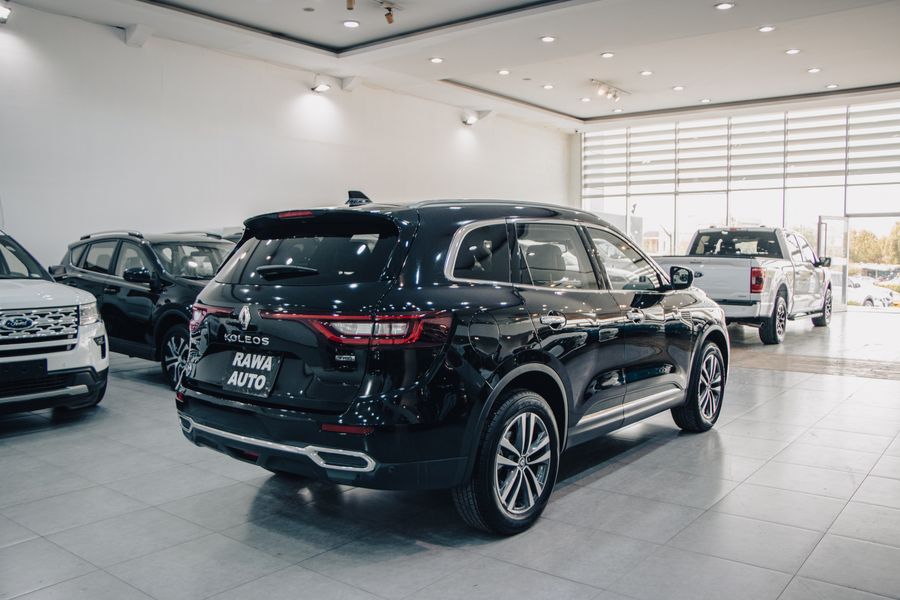
Carwow’s leasing arm, with personal and business deals scored out of ten and a full breakdown of term, initial payment, mileage and fees on every quote.
Every option side by side, with the one thing that actually distinguishes it.
| Service | Best for | How it works | Key strength | Watch out for | |
|---|---|---|---|---|---|
| 1Sell My Car | Selling privately without the hassle | Online auction | Free, with real dealer competition | Reserve may not be met | View |
| 2New Car Deals | New car buyers | Brokered offers | Honest price discovery before haggling | RRP-based savings; dealer contact | View |
| 3Carwow Leasey | Leasing a new car | Contract hire | Publishes all the cost variables | Low mileage allowances and broker fees | View |
| 4Used Cars | Used car buyers | Dealer stock | Upfront fixed pricing with reviews attached | Dealer quality varies listing to listing | View |
| 5Expert & Snapshot Reviews | Shortlisting a car | Editorial | Scored reviews organised by how you shop | Commercially adjacent to the sales journey | View |
| 6Vans | Sole traders and small businesses | LCV offers | Rare cross-brand van price comparison | Thin on payload and conversion detail | View |
← swipe the table to see all columns →
Three reasons, all of which come down to who is competing for whom.
The traditional model has one buyer negotiating against one dealer who does this every day. Carwow inverts it: your car or your configuration goes in front of a large network of dealers who bid or quote against each other. Carwow says its selling auctions reach over 6,000 trusted dealers. Competition does the negotiating that most people are bad at.
Selling through Carwow costs nothing – no admin fee, no listing fee, no commission taken from your side. The platform makes its money from the dealer side of the transaction. That alone makes getting a valuation a low-cost exercise, even if you end up selling elsewhere or keeping the car.
Carwow publishes full expert reviews scored out of ten, short Snapshot reviews, buying guides and an annual Car of the Year awards programme, and it sits alongside the buying and leasing journeys. You can read the verdict on a car and configure an offer for it without changing site, which is useful when shortlisting.
Three things to get right before you start clicking.
These are different prices and Carwow supports both. A part exchange is convenient and happens in one transaction at a dealership. Selling separately through the auction almost always nets more, because a dealer buying your car in isolation is bidding on it rather than using it as a lever in a bigger deal. Carwow’s own marketing claims an average uplift over part-exchange values, asterisked in its small print. If you can tolerate a short gap without a car, sell separately and buy with cash in hand.
On the selling journey you enter your registration, add details and photos, and agree a reserve price: the figure below which you will not sell. Carwow’s team will help you set it, and their incentive is for the car to sell. Decide your own floor beforehand, using several independent valuations. Your listing then goes into a daily auction, and if it does not sell, Carwow shows it for a further couple of days. Accepting a sub-reserve offer out of impatience is the main way people lose money here.
Whichever buying journey you use, the number you see is a dealer’s offer and the dealer will contact you. On new car deals that offer is a saving against list price and may depend on specific stock, finance or options. On leasing, the monthly figure is an estimate with its own initial payment, broker fee, term and mileage, and Carwow says plainly it is not an offer of finance. Read all four together: a low monthly on a small mileage allowance is not cheap if you drive twice that.
Carwow runs a vehicle history check in partnership with MotorCheck, covering whether a car has been stolen, written off or has outstanding finance, using the registration alone. If you are buying privately or from an unfamiliar trader, this is the cheapest insurance available and should not be optional.
It is worth doing even on a dealer car. Write-off categories and recorded damage change what a car is worth and what it will be worth when you sell it, and a clean MOT history tells you more about how a car has been treated than its mileage does.
Carwow introduces you to a dealer, broker or buyer; it is not the seller. Your contract – and therefore your consumer rights, warranty and any dispute – sits with that dealer or finance provider, not with the platform. Keep every piece of correspondence and read whose name is on the paperwork before you sign.
That also applies to the figures. Savings shown against list price, lease monthlies and valuations are all estimates subject to status, availability and dealer requirements. Carwow says so in its own small print, and the number you are finally offered can differ from the one that brought you to the page.
Ranked by how well each one delivers on what it promises, not by price.
This is the one journey where Carwow’s model is unambiguously in your favour – dealers bid, you set the floor, and it costs you nothing.
The selling journey is three steps. You enter your registration for an instant valuation based on market data and dealer demand, you complete the listing with details and photographs, and you agree a reserve price with Carwow’s team. The car then enters a daily online auction in front of what Carwow says is a network of over 6,000 trusted dealers, who bid against each other. The best offer wins, the winning dealer arranges free collection at a time that suits you, and payment can be made at collection. Carwow says the whole process can complete in as little as 24 hours once a listing is approved.
The reason this ranks first is that it is free, which removes the usual trade-off between convenience and cost. Selling privately gets you the most money but involves strangers, test drives and payment risk; instant-offer sites are fast but make a single unopposed offer. An auction with a reserve sits between the two and is the right default for most ordinary cars. The honest caveats: a thin-demand car may not meet reserve, Carwow’s team has an interest in a reserve that clears, and the collecting dealer can re-inspect, so undisclosed damage will cost you at the kerbside.
We may earn a commission from this link, at no extra cost to you.
The value here is not the discount percentage – it is knowing the real transaction price before you ever speak to a salesperson.
The new car journey lets you pick a model, choose engine, trim, options and colour, and then see offers from dealers expressed as a saving against list price. Carwow also curates a rotating selection of the strongest current offers across the market, which is a quick way to see where manufacturers are discounting hardest this month, currently heavy on electric and plug-in hybrid SUVs and superminis. Because dealers are quoting against each other rather than against you, the number tends to be closer to what a car really sells for than a showroom opening gambit.
Two things to keep in mind. First, the savings are measured against RRP, which is a generous benchmark; a large percentage off a slow-selling car is not automatically a better buy than a small discount on a car that holds its value. Second, you are creating a lead, and dealers will contact you, some persistently. Offers can also depend on specific stock, finance products or option packs, so the saving on the configuration you see is not necessarily the saving on the one you want. Check which dealer the offer comes from and how far away it is before getting attached to a figure.
We may earn a commission from this link, at no extra cost to you.
Leasing comparison sites usually hide the initial payment behind the monthly figure. Carwow publishes all four variables, which is the whole point.
The leasing journey, branded Carwow Leasey, lists personal and business contract hire deals with a score out of ten indicating how good the price is against the market. The really useful part is the leasing details panel on each deal, which sets out the term of agreement, the monthly payment, the initial payment including any broker fee, the annual mileage allowance, and whether maintenance and metallic paint are included. Those five variables are the lease. A site that shows you only a monthly figure is not telling you the price.
Read the mileage line first. Many of the most attractive monthlies are built on a low annual allowance, and excess mileage charges at the end of a contract can wipe out the saving entirely. Then read the initial payment, which often includes a broker fee and is real money you pay up front. Carwow states clearly on these pages that the figures are estimates and not an offer of finance, that quotes are subject to dealer and broker requirements including status and availability, and that further charges may apply based on the vehicle’s condition or mileage at return. All of that is normal for leasing and all of it is worth reading.
We may earn a commission from this link, at no extra cost to you.

Fixed, upfront pricing on used stock is the right model, it just means the negotiation you avoid was never yours to win.
The used journey works in three stages: browse and filter stock from Carwow’s UK-wide dealer network, contact the dealer directly to ask questions or arrange a test drive, then buy at a fixed price with flexible payment options and either home delivery or collection. Pricing and vehicle history information are shown upfront, and each listing sits alongside Carwow’s expert review of that model, which is more context than most classified sites give you. For people who find used-car negotiation unpleasant, a fixed price is a feature rather than a limitation.
The limitation is that you are buying from whichever dealer holds the car, so condition, preparation standards, warranty and aftercare vary from listing to listing in a way they do not on a manufacturer-approved scheme. Carwow’s own used-car guidance is sensible and worth following: inspect for uneven tyre wear, rust and fluid leaks, test the electrics and air conditioning, run a history check for theft and write-off records, and take a proper test drive. Ask specifically what warranty is included and who provides it, because that answer differs between dealers on the same platform.
We may earn a commission from this link, at no extra cost to you.

Use the reviews before the offers. Shortlisting on price first is how people end up with a cheap car they do not want.
Carwow’s editorial operation covers full written and video reviews scored out of ten, browsable by make, by body type; small cars, SUVs, estates, seven-seaters, sports cars, hybrids, electric, Motability; and by individual model. There is also an annual Car of the Year awards programme, and a Snapshot Reviews format the site describes as speed dating for cars: short videos you watch, save or dismiss to build a shortlist. For anyone who does not already know what they want, that swipe-based approach is a surprisingly efficient way to narrow a field.
The obvious caveat is commercial context. This is a commercial site that earns money when you transact, so a review sits next to a button offering you a deal on the car being reviewed. In practice the scores are not uniformly generous — plenty of mainstream cars get middling marks — but read them alongside at least one source that does not sell cars. Use the reviews to decide what you want and the offer pages to decide what you pay, and in that order, because the biggest discount in the market is still a bad buy if it is on the wrong car.
We may earn a commission from this link, at no extra cost to you.
Van buying is where comparison sites are most needed and least common, which is most of the argument for this one existing.
The vans section applies Carwow’s new-car model to light commercials, listing current deals with savings against RRP and pairing them with scored reviews of the models involved. Coverage runs across the mainstream panel and mid-size vans, Transit Custom, Transporter, Berlingo, and newer electric entrants such as the Kia PV5: with both diesel and electric drivetrains represented, and the people-carrying Tourneo variants listed alongside. For a sole trader or small business, this is a far faster way to compare across brands than approaching commercial-vehicle sales departments one at a time.
It is the thinnest of the six journeys, though, and that is why it ranks last. The catalogue is narrower than the car side, specification choices on commercial vehicles are more complex, payload, load length, roof height, towing, conversions – and those are exactly the variables a comparison table handles least well. Business buyers also need to think about VAT treatment, benefit-in-kind rules and whether a van or a crew van suits their use, none of which a savings figure addresses. Use it to shortlist and price-check, then talk to a commercial specialist before ordering.
We may earn a commission from this link, at no extra cost to you.
We assess products on construction and claims we can verify: not on which brand pays most.
We test marketing claims against the actual published construction and specification, rather than taking a product name at face value.
Every product in a guide is judged against its siblings, so the ranking reflects what you actually choose between.
Independent certification, materials and build quality all feed into the score, not just headline features.
A score means nothing without context, so every pick states who it suits; and who should skip it.
We weigh what's included and what isn't, because delivery, fees and accessories change the real price.
Brands cannot buy a position. Affiliate commissions fund the site but never determine the order or the wording.
Selling your car through Carwow is free, with no admin or listing fees, which the company contrasts directly with paid sites. Browsing reviews and new car offers is free too.
Leasing is different. Lease quotes on the site include an initial payment that may contain a broker fee, which is a real cost and is disclosed in the leasing details for each deal. Read that breakdown rather than the headline monthly figure.
Carwow says a sale can complete in as little as 24 hours. Once your listing is approved it goes into one of the daily auctions, the dealer who wins contacts you to arrange free collection, and payment can be made at collection.
How quickly it sells depends on demand for your particular car. If it does not sell in the auction, Carwow says it shows the car for two additional days as a second chance. Cars with awkward specification, high mileage or poor history take longer and attract lower bids.
Often, but not always, and nobody can promise it. The structural argument in Carwow’s favour is that multiple dealers bid rather than one company making a single take-it-or-leave-it offer, and that it does not charge you a fee.
The sensible approach is to get a Carwow valuation, an instant-offer valuation elsewhere and a trade guide figure, then set your reserve above the worst of them. Quotes cost nothing but your email address, and the spread between them on an ordinary car can be substantial.
You cannot, Carwow does not sell cars. It connects you to a franchised dealer, an independent dealer, a leasing broker or a trade buyer, and the transaction happens with them. That is why your consumer rights, warranty and aftercare all sit with the dealer rather than with the platform.
They are real dealer offers, but they are savings against list price rather than against what a well-informed buyer would otherwise have paid, and they are asterisked for a reason. Savings vary by model, trim, stock position and month, and the largest ones usually sit on cars the manufacturer needs to move.
Use them as a signal of where the discounting is, then check the specific trim and options you want. A headline saving on a top-spec car tells you nothing about the deal available on the one you actually intend to buy.
Sell separately through the auction rather than part-exchanging, then use the new car offers or leasing journey to buy with that money in hand. Read the expert review before you configure anything, and run a history check on any used car before you pay a deposit.
Get a free Carwow valuation Journey names and process details checked against Carwow’s own UK pages · Offers, valuations and lease terms change constantly
From the best-selling Classic to the adjustable Solaire and the pain-focused Rx; we compared every mattress in Saatva's lineup and matched each one to a sleep style, body type and budget.

Six thousand pieces or six hundred – we went through LEGO's current 18+ range and picked the sets worth the shelf space, the build time and the money.

Samsung's 2026 range runs from a 165Hz QD-OLED flagship to a Micro RGB LCD and an art panel that hides in plain sight. Here's which one belongs in your room.