Best overall

Samsung S95H OLED
QD-OLED165HzFlagship
The best picture Samsung sells. Perfect blacks, 165Hz motion and a significant brightness jump over last year's panel.
Samsung's 2026 range runs from a 165Hz QD-OLED flagship to a Micro RGB LCD and an art panel that hides in plain sight. Here's which one belongs in your room.

Samsung's TV naming is designed to be confusing, and 2026 has not helped. There is an OLED flagship, a Micro RGB flagship, a Neo QLED flagship and a lifestyle flagship, and the marketing presents all four as the best television the company makes.
They are actually different products solving different problems, and the right one depends almost entirely on the room it's going in. A TV that looks extraordinary in a darkened living room can be the wrong purchase for a bright kitchen-diner with windows on two sides.
Affiliate disclosure: Reviews Lounge earns a commission when you buy through links on this page, at no additional cost to you. Commissions never influence our rankings, scores or recommendations. Full disclosure.
Three televisions covering the three situations most people are actually buying for: a dark room, a bright room, and a room where the TV shouldn't look like a TV.
The best picture Samsung sells. Perfect blacks, 165Hz motion and a significant brightness jump over last year's panel.

Samsung's most advanced LCD: a backlight of discrete red, green and blue micro LEDs, built to beat daylight.

Samsung's 8K flagship, and the range that reaches the enormous sizes.
Every option side by side, with the one thing that actually distinguishes it.
| Model | Best for | Panel | Sizes | Defining feature | |
|---|---|---|---|---|---|
| 1Samsung S95H OLED | Dark rooms, best picture | QD-OLED | Up to 83" | 165Hz + ~2,700 nit peak | View |
| 2Samsung R95H Micro RGB | Bright rooms | Micro RGB LCD | 65–85" | RGB micro LED backlight | View |
| 3Samsung QN990H Neo QLED 8K | 8K & very large screens | Neo QLED 8K mini-LED | Large sizes | 8K panel + AI upscaling | View |
| 4Samsung The Frame Pro (LS03HW) | Rooms where a TV shouldn't look like one | Lifestyle / matte | 55–85" | Art Mode + customisable bezels | View |
| 5Samsung S90H OLED | OLED on a budget | OLED | Varies | Flagship contrast, lower price | View |
| 6Samsung M80H Mini LED | Mid-range / second room | Mini LED | Up to 85" | Mini-LED at mid-range pricing | View |
| 7Samsung U8000H Crystal UHD | Secondary rooms | Crystal UHD LCD | Varies | Entry-level 4K | View |
← swipe the table to see all columns →
Three genuine strengths, and they explain why the flagships cost what they do.
Samsung's anti-glare treatment is the best in the industry and the single most underrated feature in its range. In a room with windows it makes more practical difference to picture quality than contrast ratio does.
165Hz on the flagship models, HDMI 2.1 throughout the premium range and consistently low input lag. For console and PC gaming Samsung is reliably among the strongest choices.
Samsung pushes further into very large panels than most competitors, with Neo QLED reaching 115". If you want enormous, the options narrow quickly and Samsung is usually on the list.
The room decides this, not the spec sheet. Work through these in order.
This is the whole decision for most people. OLED (S95H, S90H) gives perfect blacks and is unbeatable in a controlled, darker room. In a bright room its advantage evaporates and a high-brightness LCD wins outright, that means the R95H Micro RGB or a Neo QLED such as the QN990H. Samsung's matte coating helps enormously on both, but it cannot manufacture brightness.
For 4K, a rough rule is a screen diagonal of about one and a half times your viewing distance. At 2.5m that points to roughly 65–75". Most people under-buy and regret it, but going too large in a small room makes upscaled content and compression artefacts much more obvious.
If you game on a PS5, Xbox Series X or a PC, prioritise HDMI 2.1 ports and the 165Hz panels. If you mostly stream films, put the money into panel quality instead and accept 120Hz. And if you use Dolby Vision content heavily, understand before buying that Samsung does not support it, it uses HDR10+, and that's a deliberate, long-standing position.
The 2026 OLED flagship does not ship with a One Connect box; a wireless version is sold separately. If a single-cable wall mount was the reason you were considering Samsung, budget for that accessory or look at The Frame Pro, where the clean-cable design is central to the product.
Mount height matters more than people expect. The centre of the screen should sit at roughly seated eye level; mounting above a fireplace looks tidy and produces a worse picture on every panel type, because viewing angle degrades contrast.
Ranked by how well each one delivers on what it promises; not by price.
The brightness gain is the headline: OLED's old weakness in a lit room is now much less of an excuse to avoid it.
The S95H is Samsung's 2026 flagship OLED and the best picture the company sells. It pairs QD-OLED's per-pixel light control – really black blacks, because unlit pixels emit nothing at all, with a substantial brightness increase over the 2025 S95F, reported at roughly 2,700 nits in a 10% window against about 2,000 for its predecessor, an improvement of around 35%.
For motion it runs a 165Hz Motion Xcelerator panel, which is above the 120Hz most televisions top out at and useful for PC gaming in particular. The one practical change worth knowing: the S95H does not include a One Connect box, and the wireless version is sold separately — so if single-cable wall mounting was part of the plan, budget for it.
We may earn a commission from this link, at no extra cost to you.
If your living room has windows on two sides, this is a more sensible flagship than the OLED – and it is still a flagship.
Micro RGB is Samsung's top 4K LCD technology for 2026, replacing the usual blue-LED-plus-conversion-layer backlight with discrete red, green and blue micro LEDs. The practical result is finer control over both colour and brightness across the panel, and the kind of peak output that OLED still cannot match in a sunlit room.
It is listed in 65, 75 and 85 inches, with Motion Xcelerator at 165Hz and HDMI 2.1; so it gives up nothing to the OLED on motion or gaming connectivity. Samsung has not published a peak brightness figure, and independent testing was still limited at the time of writing, so treat the brightness claim as promising rather than proven.
We may earn a commission from this link, at no extra cost to you.
8K content barely exists – but the upscaling and the sheer panel quality are why people buy these anyway.
The QN990H sits at the top of Samsung's 2026 Neo QLED range and is its 8K flagship. Mini-LED backlighting drives brightness far beyond OLED while thousands of dimming zones keep blooming in check, which makes it the sensible choice for a bright, busy room where an OLED would struggle.
Be honest about the 8K part: native 8K content remains close to non-existent, and at normal viewing distances the resolution difference over a good 4K set is very hard to see. What you are actually paying for is the best LCD panel Samsung makes, its AI upscaling, and availability at sizes that simply don't exist elsewhere in the range. If that's the purchase you're making, it's an excellent television; if you want value per inch, a 4K Neo QLED such as the QN80H gets you most of the way for far less.
We may earn a commission from this link, at no extra cost to you.

Judged as a television it's mid-range. Judged as a thing on your wall, nothing else comes close.
The Frame Pro is a design product first. Its matte, virtually glare-free screen is what makes Art Mode convincing – a glossy panel reflecting a room never looks like a print, and this one does. The customisable bezels complete the effect, and the 2026 range adds a 55-inch option alongside 65, 75 and 85 inches.
Be clear about the trade. Pound for pound a Neo QLED delivers a better picture, and reports that the Frame Pro moves to Neo QLED panels with enhanced backlighting were not confirmed at the time of writing. You are paying for the industrial design and the art function, which is a perfectly reasonable thing to buy, just not the best picture per pound.
We may earn a commission from this link, at no extra cost to you.

The step-down OLED is usually the smart buy, and 2026 looks no different.
The S90H sits a step below the S95H in Samsung's announced 2026 OLED lineup, alongside the entry-level S85H. Historically the step-down OLED has been the value sweet spot in Samsung's range: you keep OLED's per-pixel contrast and excellent viewing angles, and give up some peak brightness and a little processing refinement.
If your room is reasonably controlled for light, the practical gap between this and the flagship is much smaller than the price gap. Samsung had not published full specifications across every size at the time of writing, so confirm refresh rate and brightness for the specific panel before committing.
We may earn a commission from this link, at no extra cost to you.

Mini-LED has quietly become the default mid-range technology, and this is Samsung's version of that bargain.
The M80H brings mini-LED backlighting and what Samsung describes as ultra-wide colour into the middle of the range, and is listed at up to 85 inches. For a second room, a bedroom or a family space where the flagships are hard to justify, this is the sensible purchase.
Mini-LED at this price point is a genuine improvement over conventional edge-lit LCD: more backlight zones mean better contrast control and less of the grey-wash effect that cheap LCDs show in dark scenes. Expect a step down in processing and motion handling relative to the Neo QLED range.
We may earn a commission from this link, at no extra cost to you.

Buy it for the room nobody watches films in, and it's perfectly good at that job.
Crystal UHD is Samsung's entry-level 4K line, and it should be judged against that brief rather than against the flagships. You get 4K resolution, the Tizen smart platform and Samsung's app support in a package priced for secondary rooms.
What you give up is everything to do with contrast control: conventional LED backlighting means dark scenes look grey rather than black, peak brightness is modest, and HDR content will not look meaningfully different from standard content. For a kitchen, a guest room or a garage, that's an entirely reasonable trade.
We may earn a commission from this link, at no extra cost to you.
We assess products on construction and claims we can verify; not on which brand pays most.
We test marketing claims against the actual published construction and specification, rather than taking a product name at face value.
Every product in a guide is judged against its siblings, so the ranking reflects what you actually choose between.
Independent certification, materials and build quality all feed into the score, not just headline features.
A score means nothing without context, so every pick states who it suits – and who should skip it.
We weigh what's included and what isn't, because delivery, fees and accessories change the real price.
Brands cannot buy a position. Affiliate commissions fund the site but never determine the order or the wording.
No, and this is a long-standing deliberate position rather than an oversight. Samsung supports HDR10+, a competing dynamic-metadata HDR format it co-developed, along with standard HDR10 and HLG.
In practice the difference is smaller than the marketing suggests, both formats adjust HDR scene by scene, and a good Samsung panel handles HDR10+ content extremely well. But if you have a large library of Dolby Vision content and care about using it, that's a genuine reason to look at LG or Sony instead.
Micro RGB is Samsung's 2026 top-end LCD technology, using separate red, green and blue micro LEDs in the backlight rather than blue LEDs with a colour conversion layer. That gives finer control over colour and brightness across the panel. The R95H is listed in 65, 75 and 85 inches.
Better than OLED depends entirely on the room. Micro RGB goes far brighter, which wins decisively in daylight. OLED switches individual pixels off completely for true black, which wins in a dark room. Neither is universally superior.
Only if you want the art function. The Frame Pro's matte, glare-free screen and customisable bezel are designed so the television reads as a framed picture when it's off, and the 2026 range adds a 55-inch size alongside 65, 75 and 85 inches.
As a television judged purely on picture per pound, a Neo QLED gives you more. The Frame is a design product, and that's a legitimate thing to pay for — just don't expect it to also be the best panel at the price.
One per device that can use it. A PS5, an Xbox Series X and a gaming PC each benefit; a streaming stick, a soundbar over eARC and a Blu-ray player generally do not need the full bandwidth.
Two devices plus an eARC soundbar is the common household configuration, so check that the model you're considering has enough full-bandwidth ports rather than assuming every HDMI socket is equal: on cheaper models they are not.
For a room you can control the light in, the S95H. For a bright room, the R95H or a Neo QLED. For a room where the television should disappear, The Frame Pro.
Compare current Samsung prices Model names verified against Samsung's published 2026 range · Confirm specs and availability for your region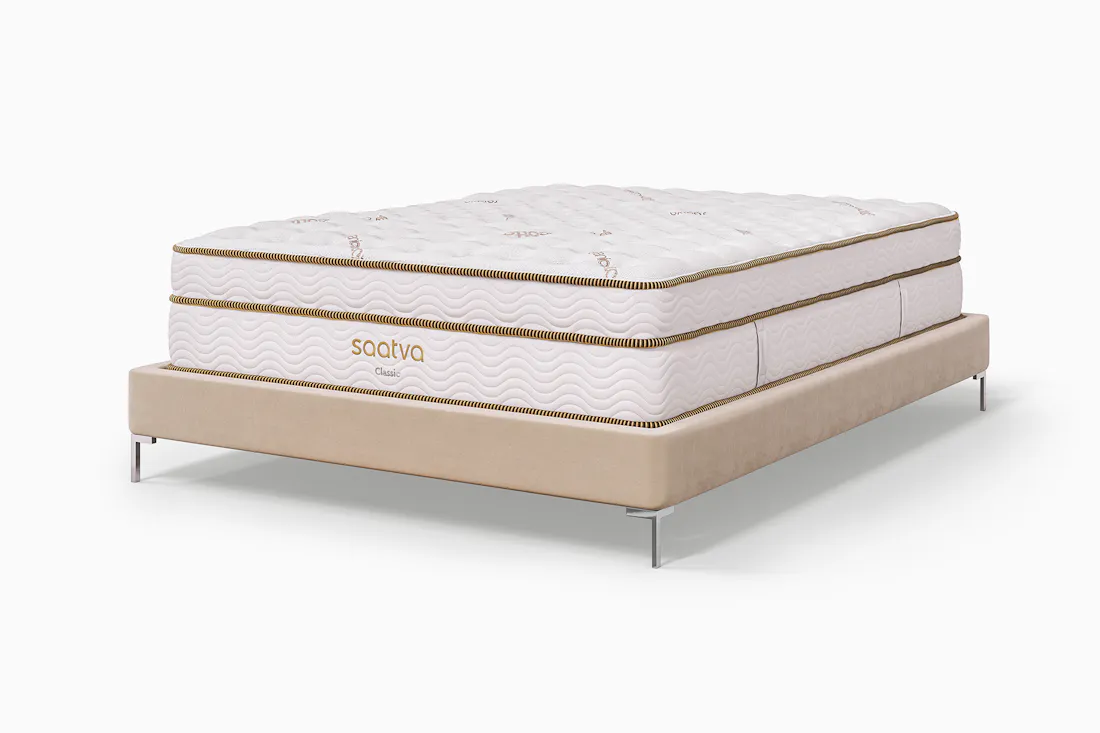
From the best-selling Classic to the adjustable Solaire and the pain-focused Rx – we compared every mattress in Saatva's lineup and matched each one to a sleep style, body type and budget.
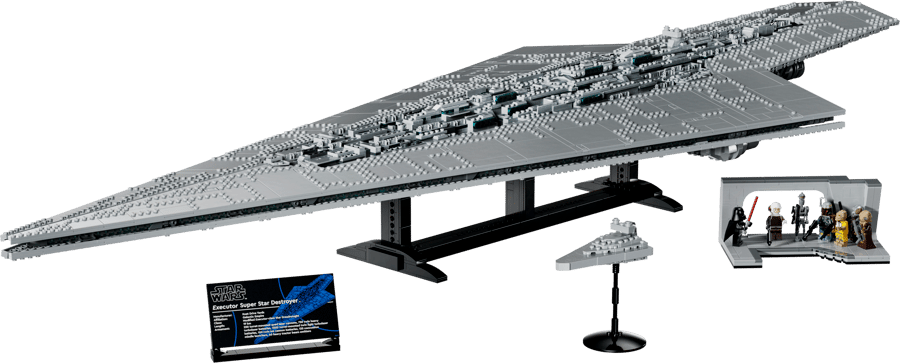
Six thousand pieces or six hundred – we went through LEGO's current 18+ range and picked the sets worth the shelf space, the build time and the money.
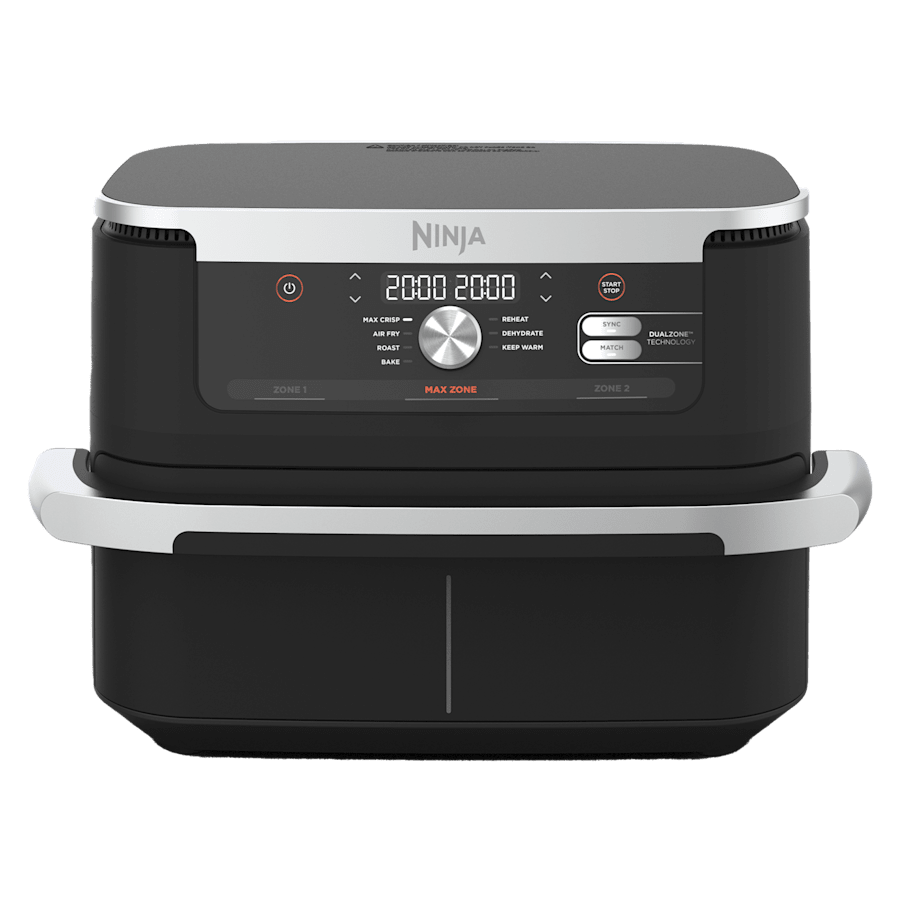
Ninja now makes air fryers, multi-cookers, blenders, ice cream machines and outdoor pizza ovens. We picked the seven that actually earn their counter space.