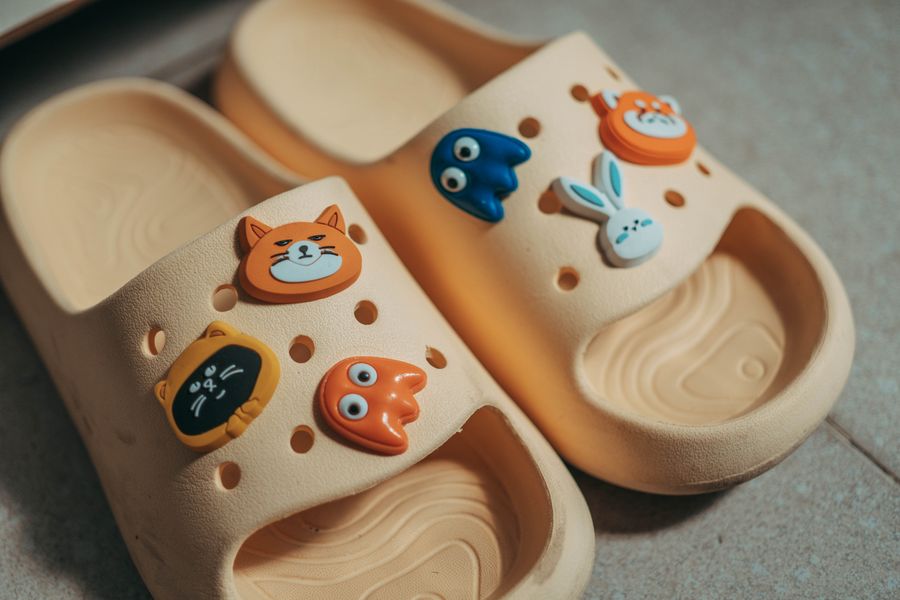
Six Crocs styles sold on crocs.co.uk, from the original clog to the work clog and the wedge sandal, with what thousands of owners say about fit, heat, straps and the shop itself.
Sophie LambertSophie covers fashion and collectibles, from denim fits to display builds worth the shelf space.
Crocs sells a great many silhouettes now, but nearly all of them are variations on one idea: a shoe moulded from the brand’s closed-cell Croslite foam, light enough to float, that you can rinse under a tap. What changes between styles is the fit, the footbed, how much of the foot is covered, and how much height is under it.
This guide covers six styles that are listed on crocs.co.uk at the time of writing and that between them span the range: the original, the winter version, the platform, the work clog, a sandal and the sportier Echo. We have read the customer reviews on Crocs’ own site and on Trustpilot, so the cons are the ones owners actually report.
Quick answer Buy the Classic Clog if you want the Crocs everybody means when they say Crocs. If your feet are cold from October to March, the Classic Lined Clog is the same shoe with a fuzzy liner. For a kitchen, ward or bar, skip both and buy the Bistro Work Clog.
Crocs makes one idea in many shapes: a moulded Croslite foam shoe you can hose down.
Note: Links on this page go directly to the brand. Reviews Lounge currently earns no commission from them. How we are funded.
The shortlist
Start here
Three styles that cover most people: the original, the warm one, and the one with some height.
Best overall
Classic Clog
★★★★★4.6/ 5
Roomy fitCrosliteJibbitz
The original and still the reference point: fully moulded Croslite, ventilation ports, a pivoting heel strap and the brand’s roomiest fit. Tens of thousands of reviews, and most of them are about comfort.
The Classic Clog with a soft lining through the footbed and upper. Treated as a slipper by most owners, and the one style people say they cannot go back from in winter.
The Classic upper on a heightened, contoured outsole, with Jibbitz holes on the backstrap too. The style most often bought to be seen in rather than to stand in.
Three things the brand does well, and the plain reason it polarises.
One material that does the work
Croslite is a closed-cell foam that is moulded rather than stitched, so a Classic Clog has no seams to rub, nothing to absorb water and nothing that needs breaking in. It is also why the shoes are so light. Reviewers across every style praise easy-on, easy-off and washability far more than anything else.
Comfort for standing, not striding
The footbed is cupped and the fit is deliberately roomy, which suits people who stand for hours: nurses, chefs, teachers and parents at sports fields recur constantly in owner reviews. The trade-off is that a loose, soft shoe is not a walking shoe, and reviewers who tried to hike or do long city days in them say so.
Variety on one platform
Because the base is the same, Crocs can offer the Classic lined, raised, enclosed for work or sculpted for streetwear without changing what it feels like underfoot. Jibbitz charms fit the ventilation holes on most clogs, which is a large part of why children and teenagers want them.
Buying guide
How to choose the right one
Three decisions sort the range quickly: fit, cover, and whether you need grip certified for work.
1
Start with fit, because there are no half sizes
Crocs’ own fit guide names three fits. Roomy is the most generous and is the fit of the original clog; Relaxed gives a little less room; Standard is snug but not tight. Most clogs come in whole sizes only, so half-size wearers must round: down for a more secure clog, up for wide feet or thick socks. The Echo runs large in many reviews, so treat it separately. The website shows UK sizes but the shoes are marked in US sizes, which confuses people at delivery.
2
Decide how much of the foot you want covered
An open, ventilated clog is the coolest option and the one that handles water best. A lined clog is warm indoors but the liner cannot be removed or properly washed, and several owners say it flattens and can smell with daily wear. An enclosed work clog like the Bistro protects the toes from spills but has no vents, and sweaty feet is the single most common complaint in its reviews. Choose cover for the conditions you are actually in, not for the look.
3
Buy the certified sole if you need grip at work
Standard Crocs are not slip-resistant footwear and their tread wears smooth over time, which owners say becomes a real problem on wet floors. The Crocs at Work range uses the brand’s Crocs Lock tread and is CE certified for the purpose. If an employer or hospital trust has a footwear policy, check it before buying: some require a fully enclosed heel as well as a toe, which rules out an open-backed clog regardless of its tread.
📏 Sizing, straps & fakes
Sizing is the most repeated complaint on Crocs’ own review pages, and it is not only about half sizes. A number of long-term owners report that a new pair in their usual size fits differently from an older one, sometimes narrower, sometimes longer, and that the same style can fit differently by colour. The sensible approach is to order one pair, try it indoors, and use the returns window rather than buying several at once.
The heel strap is held by two rivets, and Crocs’ UK help pages state plainly that the company does not currently replace straps, liners or rivets. Straps breaking within weeks appears in reviews of several styles. Counterfeits are also widespread on marketplaces; buying from crocs.co.uk or a known retailer is the only reliable protection, and a pair that is unusually shiny, stiff or heavy is a warning sign.
🧼 Care, heat & smell
Croslite does not absorb water, so unlined styles can be rinsed, scrubbed with mild soap and left to air dry. Do not dry them on a radiator, in a hot car or in direct sun: shrinking after being left in heat is a recurring one-star review, and the brand’s own care advice is to keep the shoes away from high temperatures.
Because the foam is closed-cell, unlined clogs breathe through the ventilation ports and dry quickly, which keeps smell manageable. Lined and enclosed styles do not have that advantage, and owners of both report sweaty feet and, in the lined clog, a liner that holds odour because it cannot be taken out and washed. If your feet run hot, stay with the vented styles.
In-depth reviews
All 6, reviewed
Ranked by how well each one delivers on what it promises; not by price.
1
Best overall
Classic Clog
★★★★★4.6/ 5
4.6Score
Everything else in the range is a variation on this shoe, and for most buyers the variation is not an improvement.
Why we rate it
The Classic Clog is moulded in one piece from Croslite, with ventilation ports across the forefoot that let water and grit out, a heel strap that swings back for a secure fit or forward to wear it as a mule, and a cupped footbed. It carries the brand’s Roomy fit, the most generous Crocs makes, which is why it works for wide and swollen feet and why nurses, parents and gardeners keep buying it. It is the only style on this list with a review count in the tens of thousands on Crocs’ own site, and the headline themes are easy on and off, lightness and washability.
The complaints are specific. A noticeable number of long-term owners say a new pair fits differently from the one it replaced, narrower or shorter, and that is before the whole-sizes problem for anyone who is a half size. Blisters appear in the cons list, usually from the strap or the rim on a first long wear. Straps can break and Crocs does not replace them. The tread also wears smooth over a couple of years and then the shoe is slippery on wet floors. None of that stops it being the right first pair; it just means buying one, not three, until you know your size.
Fit: Roomy, the brand’s most generous
Material: Fully moulded Croslite foam
Strap: Pivoting heel strap
Sizes: Whole sizes only
Pros
Ventilated, water-friendly and rinses clean in seconds
Roomiest fit in the range suits wide and swollen feet
Lightest and most cushioned option for standing on hard floors
Takes Jibbitz charms through the ventilation holes
Cons
Whole sizes only, and fit reportedly varies between batches and colours
Heel strap and rivets can fail, and Crocs does not replace them
Tread wears smooth and becomes slippery on wet surfaces
A house shoe you can take the bins out in, provided your feet do not run hot.
Why we rate it
Crocs describes the Lined Clog as the Classic with a warm, fuzzy liner, kept light by the same Croslite construction and fitted with the same pivoting heel strap, and that is exactly what it is. It takes Jibbitz charms, it goes outside without complaint, and the warm lined comfort theme dominates its reviews, of which there are more than for any style here except the Classic. People wear it from the moment they get home until bed, and a striking number of reviews are from repeat buyers replacing a worn pair with another, which is the strongest endorsement a slipper gets.
The liner is also the weakness. It is not removable and cannot be washed properly, so it compresses with daily wear, can hold odour, and in a few reviews has started to come away inside the shoe. It takes up room too: owners say the lined version feels tighter than their unlined Classic in the same size, so going up a size is common if you plan to wear socks. Because the liner fills the ventilation ports, the breathability that makes the Classic easy to live with is largely gone. If you want warmth and have cool, dry feet, it is excellent; if your feet sweat, buy the unlined clog and wear socks.
Fit: Roomy, but liner reduces room
Lining: Fixed fuzzy liner, not removable
Strap: Pivoting heel strap
Comfort tier: Dual Crocs Comfort
Pros
Genuinely warm; the most-praised feature in its reviews
Light enough to forget you are wearing it indoors
Same heel strap and Jibbitz holes as the Classic
Cons
Liner cannot be removed or washed and flattens over time
Feels tighter than the unlined Classic; socks need a size up
Owners who love it wear it for whole shifts; owners who hate it describe walking on two bricks. Both are telling the truth.
Why we rate it
Crocs built the Classic Platform by keeping the Classic upper and putting a taller, contoured outsole under it, with a slimmer silhouette than the Mega Crush and a backstrap that takes charms as well as the upper. It sits in the Iconic Crocs Comfort tier, the same as the Classic. The reviews are overwhelmingly positive and the dominant themes are comfort for long wear and comfort for shifts, which suggests the extra height does not cost much for most people, and the fashion angle is most of its appeal.
But the one-star reviews are more pointed than the Classic’s. Several owners describe the shoe as heavy and the footbed as hard, and a few say it felt unstable, with one reporting a fall at a wedding. Sizing complaints are also sharper: people who wear the Classic in a given size report the Platform fitting both smaller and larger, so do not assume your Classic size carries across. If you want a platform mainly for looks and are steady on a wedge, it is the right choice; if you want the Crocs feel with more cushioning, the unlined Classic is softer and lighter.
The LiteRide footbed is the softest thing Crocs puts under your foot, which is why people persevere with a shoe that is so difficult to buy in the right size.
Why we rate it
The Echo is Crocs’ answer to the chunky trainer. It is still a fully moulded Croslite clog with ventilation ports, buoyant and quick to dry, but it adds a LiteRide drop-in footbed for dual-density cushioning and a heel pad on the back strap. Crocs lists it in its sport styles category in the UK. Reviewers describe the footbed as noticeably softer than a Classic, and comfort for long wear and cushioned comfort are the leading themes in its reviews, which is why it has become a popular choice for people who wear Crocs to work but want them to look less like Crocs.
Sizing is the problem, and it is not a minor one. Runs big and sizing inconsistencies are among the most frequent themes in Crocs’ own reviews of the Echo, with owners sizing down one and sometimes two sizes from their Classic, and some reporting that different colours fit differently. Blisters at the ankle and heel appear more often than for the Classic, partly from the firmer upper and partly from the strap, and one or two reviews mention the strap snap failing. Its recommend rate on Crocs’ site is lower than the Classic’s. Buy it for the cushioning and the look, but expect to return a pair before you get the size right.
Fit: Reported to run large; size down
Footbed: LiteRide drop-in over Croslite
Strap: Back strap with heel pad
Category: Sport styles on crocs.co.uk
Pros
Softest footbed of any clog here
Looks closer to a trainer than a clog
Still floats, vents and rinses like a Classic
Charms fit; heel strap is padded
Cons
Runs large and inconsistently, often needing a full size down
Nurses and chefs are its loudest fans and its loudest critics, and the dividing line is almost always how hot their feet get.
Why we rate it
The Bistro is what Crocs sells to people who stand on wet floors for a living. It keeps the fully moulded Croslite construction and the cupped footbed but closes the toe, thickens the material across the top of the foot to shrug off spills, and swaps the standard sole for the brand’s Crocs Lock slip-resistant tread; the product page describes it as CE certified and designed for food service, hospitality and healthcare. It is listed on crocs.co.uk alongside the Classic Work Clog and the Specialist II. Its reviews are led by comfort for shifts and comfort for long days, and it draws a conspicuous number of multi-year owners.
The cons follow directly from the design. With no ventilation ports, sweaty and hot feet is the most common complaint, and a few owners blame it for athlete’s foot. The fit hugs the foot more than a Classic and some reviewers find it tight across the instep, though others say it runs big, so again try one pair first. Enclosed Croslite also shrinks if left in sun or on a radiator, which several one-star reviews learned the hard way. And it is a work shoe: the cons list is led by unstylish, which is fair. If your workplace requires an enclosed heel as well, look at the Specialist II or a lace-up instead.
Tread: Crocs Lock slip-resistant
Toe: Enclosed, thicker metatarsal area
Strap: Croslite heel strap
Certification: CE certified for work use
Pros
Slip-resistant tread and enclosed toe for wet, busy floors
Wipes clean; owners report years of service
Comfortable for long shifts in the majority of reviews
Listed in the UK alongside other Crocs at Work styles
Cons
No vents, so hot and sweaty feet is the top complaint
Fits closer than a Classic and inconsistently across pairs
The comfort is real and so are the two failure modes: the strap hardware, and the wedge on anything other than a flat floor.
Why we rate it
The Brooklyn collection is Crocs’ dressier line, and the Low Wedge is its most reviewed style. It pairs a LiteRide foam footbed with a Croslite foundation, soft Matlite uppers that Crocs says feel broken-in from day one, a deep heel cup and an adjustable heel strap with a pushpin buckle. Reviewers rate it true to size far more consistently than the clogs, and very comfortable sole, comfort for standing and all-day comfort lead its review themes, with hairdressers, teachers and people with plantar fasciitis recurring. It is the style to buy if you want the cushioning but need to wear it with ordinary clothes.
Two things go wrong. The first is the strap hardware: the pushpin and the small metal keeper are reported to break within a handful of wears in a cluster of one-star reviews, and Crocs does not replace straps. The second is stability: a soft wedge with an open side is easy to go over on, and several owners describe turning an ankle on a pebble or uneven pavement. Wide feet are also split, with some praising the room and others reporting rubbing across the toes on the first wear. Keep it for flat ground, check the buckle on arrival, and treat the first wear as a test indoors so you can still return it.
Footbed: LiteRide foam on Croslite base
Upper: Soft Matlite two-strap
Heel: Adjustable pushpin buckle strap
Fit: Reported true to size
Pros
Most consistent sizing of the six
LiteRide cushioning praised for standing all day
Rinses and dries like a clog but looks like a sandal
Adjustable heel strap, unlike the clogs
Cons
Buckle pin and strap keeper reported to break early
Wedge is unstable on uneven ground
Rubbing across the toes reported by some wide-footed owners
We assess products on construction and claims we can verify, not on which brand pays most.
Claims checked against spec
We test marketing claims against the actual published construction and specification, rather than taking a product name at face value.
Like for like within a range
Every product in a guide is judged against its siblings, so the ranking reflects what you actually choose between.
Certification and durability
Independent certification, materials and build quality all feed into the score, not just headline features.
Matched to real people
A score means nothing without context, so every pick states who it suits, and who should skip it.
Total cost of ownership
We weigh what's included and what isn't, because delivery, fees and accessories change the real price.
No sponsored rankings
Brands cannot buy a position. Affiliate commissions fund the site but never determine the order or the wording.
FAQ
Common questions
What is the returns policy on crocs.co.uk?
Crocs’ UK help pages say returns are accepted within 30 days of delivery provided the items are in like-new condition and were bought from crocs.co.uk. You request the return online, receive an email with a link to a prepaid Royal Mail label, then print it and take the parcel to a Post Office. The prepaid label only applies to orders delivered to a UK address.
Refunds are stated to arrive on average within ten working days of the warehouse receiving the shoes, to the original payment method. Trustpilot reviews of crocs.co.uk describe refunds taking considerably longer than that and difficulty reaching a human in support, so keep your proof of posting and chase in writing if the window passes.
Does crocs.co.uk deliver for free, and where from?
The FAQ says free delivery is available, though it does not state the threshold on that page, so check the basket before you assume. Standard delivery is by courier and quoted in working days rather than next day. Orders are dispatched from the Netherlands, and delivery is to the UK mainland only: islands and PO boxes are not served. Orders can be cancelled within half an hour of being placed but cannot be changed after that.
Should I size up or down?
There is no single answer, which is why the question comes up so often. The Classic and its variants are the roomiest fit the brand makes, so people who want a secure clog tend to round down from a half size, while people with wide feet or who wear thick socks round up. The lined clog feels tighter than the unlined one because the liner takes up room.
Styles that are not based on the Classic behave differently. The Echo is widely reported to run large, and the Bistro work clog hugs the foot more closely than a Classic. Use the size chart on crocs.co.uk, remember that the number moulded into the sole is the US size, and rely on the returns window for a first pair.
Is Crocs Club worth joining?
Crocs Club is the brand’s free membership scheme, promoted across crocs.co.uk with a discount code on your next purchase for signing up. The UK site does not publish a points table or tiered benefits, so treat it as a sign-up discount and a mailing list rather than a loyalty programme in the airline sense. If you are placing one order, joining first is an easy saving.
What does the warranty cover?
The UK FAQ gives a 90-day guarantee against defects in materials and workmanship from the date you receive the shoes, and asks you to email customer service with your order number and a description before sending anything back. Crocs decides whether to replace, refund or credit.
It explicitly excludes straps, liners and rivets, which the company says it does not replace. Since strap failures are among the most common complaints, that is worth knowing before you buy a style whose fit depends on the heel strap.
Which Crocs to buy
For most people the Classic Clog is the right first pair, and the lined version if you want it mainly indoors in winter. Buy the Bistro if you need certified grip at work, the Brooklyn wedge if you want something closer to a sandal, and try one pair before you commit to several.
Browse current Crocs styles
Styles and policies checked against Crocs’ own UK and EU pages · Availability, sale pricing and sizing change constantly
Levi's sells one jean in dozens of shapes, and the number on the label is the only thing that matters, we match the six fits worth knowing to body shapes, rises and the shoes you actually wear.
The 1460, the 2976 Chelsea, the 1461 shoe and the platforms all wear very differently: we compare six styles on shape, break-in and who each one is actually for.
Nike's running range splits into daily trainers, cushioned cruisers, support shoes, tempo shoes and carbon racers, we match six current models to the runs you actually do.